Type "was Lincoln interested in UFOs" into a search bar and you'll find plenty of confident claims floating around online. Before repeating any of them, it's worth slowing down and looking at what actually comes from real historical sources versus what has been invented or exaggerated over time.
Fact-checking a claim like this isn't about being a spoilsport. It's about respecting Lincoln's actual, well-documented life, and respecting readers enough to give them an honest answer rather than a fun-sounding rumor dressed up as settled history.
It's a pattern worth watching for generally: the more famous a historical figure, the more likely their name gets attached to an exciting but unverified story over time, simply because a famous name draws far more attention and shares than an obscure one ever could.
Where This Claim Comes From
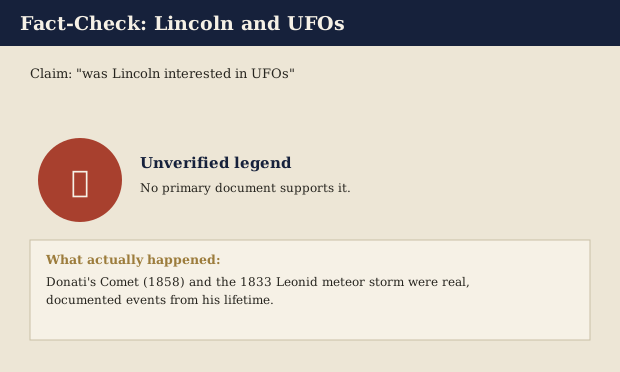
The idea usually traces back to loose, secondhand retellings rather than any document written by Lincoln himself or verified by his contemporaries. No diary entry, letter, or official record written during Lincoln's lifetime describes him witnessing or discussing anything resembling a modern UFO report. Given how thoroughly historians have studied Lincoln's papers, a genuine firsthand account would almost certainly have surfaced by now if it existed.
What Lincoln's Era Actually Looked Like, Sky-Wise
Lincoln lived from 1809 to 1865, decades before the Wright brothers' first flight and almost a century before the term "flying saucer" was coined. Reports of unusual sky objects from this general period do exist, most famously the 1896-97 American "airship wave," but that happened more than three decades after Lincoln's death, and it's a completely separate story we cover in our article on UFO sightings before 1900.
Comets and Meteor Showers During His Lifetime
Lincoln's lifetime did include some genuinely dramatic sky events, including Donati's Comet in 1858, which was widely visible and written about across the United States, and the Leonid meteor storm of 1833, an event so intense it was remembered for generations as "the night the stars fell." Some modern retellings appear to blend memories of real astronomical events like these into vaguer, exaggerated UFO-style claims, even though contemporary accounts describe them clearly as comets and meteors, not unidentified craft.
Why This Legend Persists Anyway
Lincoln is one of the most written-about figures in American history, and his enormous cultural presence makes him a popular subject for internet folklore of all kinds, UFO-related or otherwise. Once a claim like this gets repeated enough times online, it can start to feel true simply through familiarity, even without a single verifiable original source behind it.
What We Can Say With Confidence
There's no reliable historical evidence that Abraham Lincoln ever reported, discussed, or was asked about anything resembling a modern UFO sighting. What we can say is that his era experienced real, well-documented astronomical events that later folklore may have reshaped into something more dramatic than the original sources describe.
A Better Way to Explore This Era
If you're interested in genuine historical accounts of unusual sky phenomena from centuries closer to Lincoln's time, our article on UFO folklore before airplanes existed covers verifiable folklore traditions with real documented origins, rather than unsourced internet claims.
How This Compares to Genuinely Documented 19th Century Reports
It's worth contrasting the unsourced Lincoln claim with the genuinely documented Airship Wave of 1896-97, which involved real newspaper coverage naming real towns and, in many cases, real named witnesses, even if many individual stories were later shown to be exaggerated or invented for entertainment. The difference is that the Airship Wave left an actual paper trail historians can examine today, while the Lincoln UFO claim leaves no comparable trail at all. That contrast is a useful lesson in how to weigh historical claims generally.

Why Careful Fact-Checking Matters Here
It might seem harmless to repeat a fun-sounding historical claim, but treating unsourced legends as settled fact makes it harder for readers to trust genuinely well-documented history when they come across it. Keeping folklore and verified record clearly labeled, rather than blending them together, is part of what makes a historical claim actually useful rather than just entertaining.
Frequently Asked Questions
Did Lincoln ever mention seeing anything unusual in the sky?
No verified letter, diary entry, or contemporary account supports this claim. It appears to be a modern internet legend without a traceable original source.
What real sky events happened during Lincoln's presidency?
Donati's Comet in 1858 and the Leonid meteor storm of 1833 were both genuine, widely documented astronomical events from Lincoln's lifetime.
Should I stop sharing this claim if I've seen it online?
You don't have to stop sharing it as a fun bit of internet folklore, but it's worth being clear, when you do, that it isn't a verified historical fact, the same way you might note a joke isn't meant literally.
A Broader Lesson About Historical Figures and UFOs
Lincoln's case is a useful template for evaluating almost any famous-name UFO claim you come across online. Check for a primary source. Check whether the claim matches what we actually know about the person's documented life and era. And be honest when a claim simply doesn't hold up, even if it's a fun story to imagine.
A Quick Summary
No verified source ties Lincoln to a UFO sighting or interview. Real, documented sky events from his lifetime include a bright comet and a dramatic meteor storm. Knowing the difference between the two keeps the history accurate while still leaving plenty of genuinely fascinating material to explore.
Related Reading
For a similar look at another historical figure often linked to UFO folklore, read our article on whether Napoleon was asked about UFOs, or explore genuinely ancient accounts in our piece on ancient UFO sightings in history.