Of all the ancient civilizations, Rome left behind some of the clearest written evidence of unusual sky events. Looking closely at UFO sightings in ancient Rome means reading through what the Romans called "prodigies," strange occurrences they believed carried messages from the gods.
Rome's careful record-keeping habit is exactly why this particular ancient culture gives modern researchers so much to work with, far more than most other civilizations from the same era. Reading these records today offers a rare, genuinely checkable window into how one ancient society responded when the sky did something it couldn't explain.
What Is a Roman Prodigy?
In ancient Rome, a prodigy was any unusual event, an earthquake, a two-headed animal being born, or a strange sight in the sky, that Roman religious officials treated as a sign requiring a response, usually a ritual or sacrifice to keep the gods happy. Because prodigies were taken seriously as matters of state, they were often recorded formally, which is exactly why we still have written descriptions of them today.
The Historian Julius Obsequens
The most useful surviving source is a work called the "Book of Prodigies," compiled by a historian named Julius Obsequens, likely in the 4th century CE, using earlier Roman records as his source material. It lists dozens of sky-related events across several centuries of Roman history, including "round shields" seen blazing across the night sky, "phantom ships" appearing in the clouds, and strange lights described as fighting or crashing into each other.
Livy's Histories
The great Roman historian Livy also recorded prodigy lists as part of his massive history of Rome, giving modern researchers a second, independent source to compare against Obsequens. When both sources describe similar events around the same years, it adds real historical weight to the record, since it suggests the events were genuinely notable at the time, not invented later.
What Might Have Actually Caused These Reports
Historians and astronomers today have proposed natural explanations for many of these prodigies. "Round shields" in the sky match descriptions of sun halos, a real optical effect caused by ice crystals in the atmosphere that can create glowing circular shapes. "Phantom ships" in the clouds closely resemble a phenomenon called a Fata Morgana, a type of mirage that can make distant objects appear to float or take unusual shapes. Meteor showers and comets likely explain several of the "fighting lights" descriptions.
How This Compares to Other Ancient Cultures
Rome's organized, government-linked record keeping makes its prodigy lists more historically reliable than looser, harder-to-verify sources like the disputed Egyptian Tulli Papyrus. We compare several ancient sources side by side in our broader article on ancient UFO sightings in history.
What a Roman Witness Might Have Experienced
Picture an ordinary Roman farmer or soldier looking up at a strange glowing shape crossing the evening sky, with no scientific concept of meteors, halos, or mirages to make sense of what they were seeing. Their honest confusion, recorded secondhand by a historian years later, is exactly the kind of gap between direct experience and written record that makes ancient UFO history so hard to fully untangle, even today.

A Closer Look at Specific Recorded Prodigies
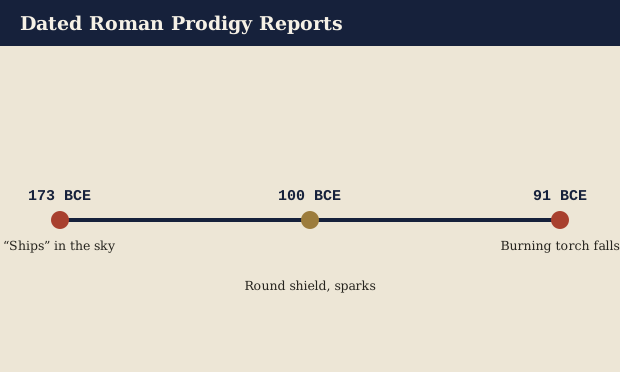
Obsequens and Livy's combined lists include quite a few specific, individually dated entries. One entry describes "the appearance of the likeness of ships" in the sky over a region of Italy in 173 BCE. Another, dated to 100 BCE, describes a "round shield" carried across the sky from west to east, giving off sparks as it moved. A separate entry from 91 BCE describes what was recorded as a "burning torch" seen falling from the sky near the city of Spoletium. Each of these was recorded with a specific year, tying the report to real, checkable Roman historical dating systems, which is part of why researchers can study them with more confidence than vaguer, undated folklore.
How the Romans Responded to a Reported Prodigy
Once a prodigy was reported and accepted by Roman officials, the Senate would typically order a formal religious response, often a public sacrifice or ritual, meant to restore balance and reassure the gods. This process was taken seriously enough that Roman religious officials, called haruspices, specialized in interpreting exactly what kind of response a given prodigy required. This tells modern historians that these sky events weren't treated as idle curiosities; they were taken as matters requiring an official state-level reaction.
Frequently Asked Questions
Are the original Roman prodigy texts still available to read?
Yes, translated versions of both Livy's histories and Julius Obsequens's Book of Prodigies are available today and are regularly studied by historians of the ancient world.
Did the Romans believe these events were caused by gods, not visitors from elsewhere?
Yes, prodigies were understood within a religious framework, as messages or warnings from the gods, not as visits from other worlds in the way a modern UFO report might be framed.
How many prodigy entries mention the sky specifically?
Sky-related entries make up a meaningful minority of the full prodigy lists, alongside far more common entries describing unusual births, earthquakes, and animal behavior, all treated with the same level of official seriousness at the time.
Why Rome's Record-Keeping Still Matters Today
Roman administrative habits, careful, dated, and cross-checked by multiple officials, happen to give modern researchers something rare: an ancient dataset that can actually be studied with real historical rigor. Few other ancient civilizations left behind anything quite this organized, which is exactly why UFO sightings in ancient Rome keep coming up in serious historical discussions of this topic, rather than being dismissed as simple myth.
Related Reading
To go further back in time, read our piece on the oldest recorded UFO sighting, or explore how sky folklore developed in cultures without Rome's formal record-keeping in our article on UFO folklore before airplanes existed.