Long before anyone used the word "UFO," people in ancient civilizations were already writing down strange things they saw in the sky. Exploring ancient UFO sightings in history means digging through old texts, some solid and well preserved, others translated so loosely that historians still argue over what they originally meant.
Sorting through these old sources takes patience and a willingness to hold two ideas at once: that ancient people genuinely experienced and recorded things they couldn't explain, and that not every old text describing something strange in the sky is automatically reliable evidence of a physical event.
Each civilization covered here approached the sky through its own particular lens, religious, political, or symbolic, which means comparing them directly isn't always straightforward. Still, laid side by side, they build a genuinely global picture of how differently, and sometimes how similarly, ancient people responded when the sky did something they couldn't explain.
Roman Prodigy Lists
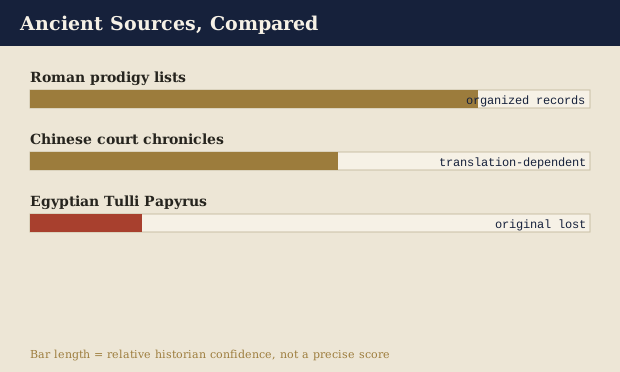
Roman historians kept surprisingly organized records of unusual sky events, treating them as "prodigies," omens the gods were believed to be sending. Writers like Livy and Julius Obsequens documented reports of "phantom fleets" seen in the clouds, glowing shields crossing the night sky, and strange fires. Because these lists were compiled by real historians using real Roman record-keeping practices, they're considered some of the most reliable ancient sources on this topic. We take a closer, dedicated look at this specific period in our article on UFO sightings in ancient Rome.
The Egyptian Tulli Papyrus Claim
A frequently cited but much shakier source is the so-called Tulli Papyrus, said to describe glowing "fire circles" over Egypt around 1450 BCE. The trouble is that the original document has never actually been found or independently verified; everything about it rests on a secondhand translation from the 1930s. Most historians treat this one with real caution rather than as solid ancient evidence.
Reading a Symbolic Text Literally
A recurring problem with ancient sources is that religious and poetic texts often used sky imagery symbolically, describing gods, power, or divine judgment, rather than literally reporting an object in the sky. The vivid "wheel" imagery in the biblical Book of Ezekiel is a good example: most religious scholars read it as a spiritual vision, even though it gets cited often in casual lists of ancient UFO reports.
Chinese and Japanese Historical Records
Historical chronicles from China describe glowing objects and unusual lights interpreted as omens tied to the fate of emperors, recorded across multiple dynasties. Japanese folklore includes similar accounts, including later, better-documented stories of strange vessels appearing off the coast. These traditions developed independently from European and Middle Eastern sources, which some researchers find meaningful, since separate cultures with no contact still described broadly similar sky events.
A Reflection on What These Old Records Meant to the People Who Wrote Them
It's worth remembering that ancient chroniclers weren't trying to solve a mystery the way a modern investigator would. A Roman scribe recording a "shield in the sky" was noting something the community considered a sign, worth writing down for religious or political reasons, not filing a scientific report. Imagining how a chronicler of that era might have described an unfamiliar sight, in their own words and worldview, helps modern readers understand the gap between how ancient people saw the world and how we do today, without pretending those imagined words are an actual historical quote.
Mesoamerican Historical Records
Ancient Maya and Aztec written records, including carved stone monuments and painted codices, occasionally include imagery researchers have connected to sky events, though interpreting these symbols is especially difficult since much of the original context and oral explanation behind them was lost or destroyed during colonization. Some researchers have proposed connections to comets or unusual astronomical alignments, which these cultures tracked with remarkable precision for religious and agricultural purposes, but firm conclusions remain limited by how much original material survives.

What Separates Solid History From Speculation Here
Across every culture discussed in this article, the same rule applies: a claim is stronger when the original document still exists, when it was recorded close to the time of the event, and when independent sources back each other up. Roman prodigy lists tend to score well on all three counts. Isolated, undocumented claims, like some versions of the Tulli Papyrus story, score poorly on all three, which is exactly why historians treat them so differently.
Frequently Asked Questions
Which ancient civilization left the best UFO-related records?
Rome is generally considered to have the most reliable ancient records on this topic, thanks to organized, government-linked historical documentation that still survives today.
Do historians take any of these claims seriously as literal sightings?
Most historians focus on what these records reveal about the beliefs and concerns of the people who wrote them, rather than treating them as literal proof of otherworldly visitors.
How can I check a claim about an ancient civilization myself?
Search for the original text by name, not just the claim about it, and look for whether reputable historians or translators have written about it independently. If a claim only ever appears on UFO-focused websites with no connection to mainstream historical scholarship, treat it with extra caution.
Why This Research Is Worth Doing Carefully
Ancient history deserves the same careful treatment as any other kind of evidence. Rushing to label every old text a confirmed UFO sighting does a disservice to genuinely fascinating historical records like the Roman prodigy lists, which stand on their own as real, verifiable documents without needing exaggeration to be interesting.
Related Reading
For more on how this ancient folklore connects to more recent centuries, see our article on UFO folklore before airplanes existed, or continue the timeline with our piece on the oldest recorded UFO sighting.